
Table of contents
This leads to higher energy bills, and also makes it harder to keep your home or building at the suitable temperature (this indirectly affects the sense of comfort you experience in your home). In other words, attic insulation plays a crucial role in regulating indoor temperatures, reducing heating and cooling costs, and protecting the building structure from moisture and air leaks.
It has to be mentioned that there are so many insulation materials, as a result, choosing the right one can be challenging. In this article, we’ll talk about the most common types of attic insulation, compare their pros and cons, and explain why polyurethane foam is considered the most effective solution for long-term performance and energy savings.
Why attic insulation matters?
Attic insulation is one of the most important parts that you have to insulate to make your home energy-efficient. With proper insulation heating and cooling costs can be reduced and indoor comfort can be enhanced. Generally, appropriate insulation will improve the overall energy performance of your building.
The attic is often the primary point of heat loss in winter and heat gain in summer, so selecting the right insulation for this space is necessary for both homeowners and building contractors.
When choosing the insulation, you have to consider several factors like thermal resistance (R-value), moisture resistance, air sealing ability, environmental impact, ease of installation, and long-term performance. This will be discussed further in the following sections.
After sales service
For price inquiries and purchasing liquid polyurethane for polyurethane foam production, please contact Imen Polymer Chemie Company.

Types of attic insulation materials (Pros & Cons)
As mentioned just before, several insulation materials are available in the market, and each one has its unique benefits and drawbacks. In the following we will discuss the most common ones and their properties:
1. Fiberglass insulation
Fiberglass is one of the most commonly used material in construction, specially for attic insulation. This type of insulation consists of fine glass fibers that trap air, and provides a barrier against heat transfer.
Pros:
- Lightweight
- Inexpensive and widely available
- Fire-resistant
- Easy to install
Cons:
- Lower R-value compared to some alternatives
- Can sink or sag (its effectiveness reduces) over time
- Doesn’t fully seal air leakage (doesn’t form an airtight barrier)
2. Cellulose insulation
Cellulose insulation is made from recycled paper products, so it is an eco-friendly option for insulating attics. Also, it can be treated with fire retardants.
The installation process of cellulose insulation can be performed by professionals who blow the material into wall cavities and attics; this ensures a complete coverage and minimized air leaks.
Pros:
- Fairly good thermal performance
- Environmentally friendly
- Affordable
Cons:
- Can absorb moisture and lead to mold
- Requires professional installation
- May settle or compact over time
- Lacks an airtight seal
3. Spray foam insulation
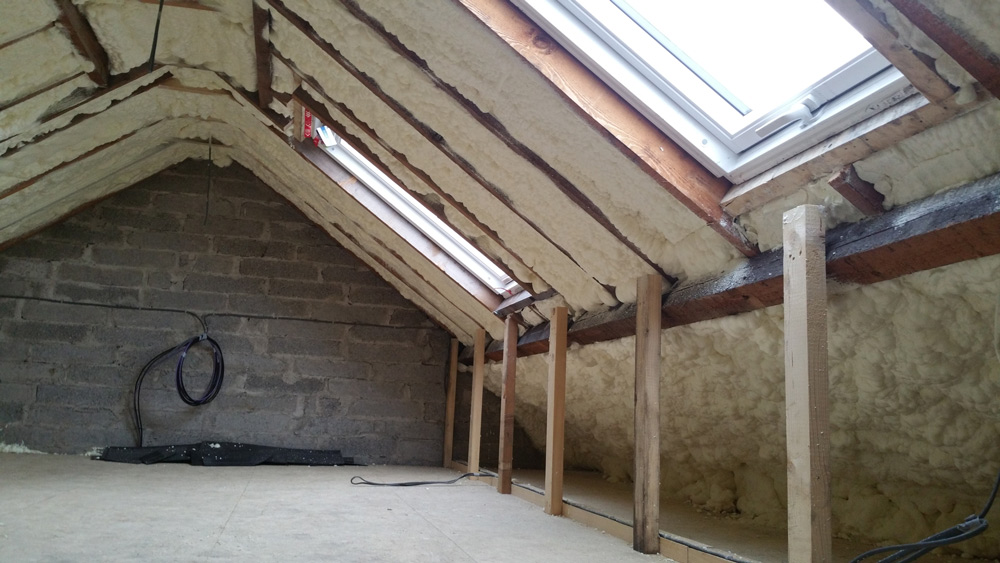
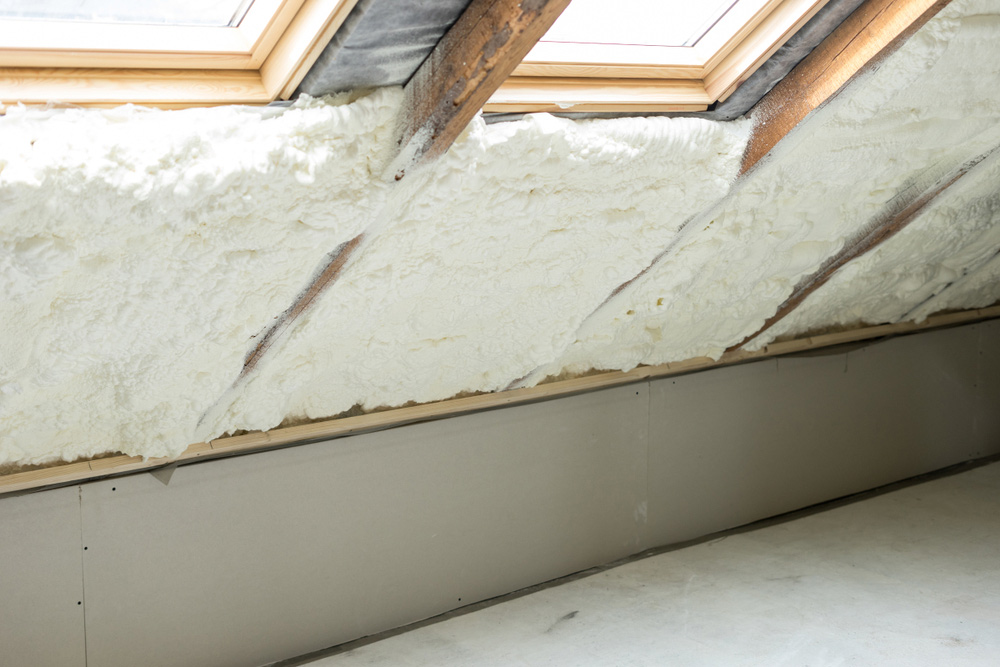
Spray foam insulation is made of polyurethane material. Once the material sprayed, it rapidly expands to fill every gap and crack, and forms a tight, air-sealing barrier. It is an excellent option for insulating hard to reach spaces.
Based on the application, it is available in open-cell and closed-cell formulations.
Pros:
- Highest R-value per inch (the best insulation performance)
- Excellent air sealing
- Moisture resistance (avoid mold growth)
- Long-lasting and durable
- Do not settle or sag (great mechanical strength)
Cons:
- Higher cost than other types (but it is a smart investment in the long term)
- Requires professional application
- Off-gassing during installation may need temporary ventilation
4. Mineral wool (Rockwool)
Mineral wool is made from basalt rock and steel slag. The material has great fire resistance characteristic, and this makes it a safe choice for various applications, including walls, roofs, and floors. Moreover, its sustainable nature, and its ability to resist moisture and mold, leads to healthier living environments. However, despite these advantages, mineral wool is not an effective air barrier.
Pros:
- Non-combustible
- Good R-value
- Water-repellent and mold-resistant
Cons:
- Heavier than other materials
- More expensive than fiberglass or cellulose
- Not as airtight as spray foam
5. Radiant barrier insulation
Radiant barriers reflect heat rather than absorb it. These are typically installed in warmer climates to reduce heat gain. In other words, they can significantly reduce the amount of heat that enters a home, resulting in lower air conditioning costs and increased comfort. On the opposite side, in colder seasons, they can somehow help keep warm air inside, and prevent heat loss.
Pros:
- Effective in hot climates
- Lightweight and easy to install
- Works well with other insulation types
Cons:
- Fairly ineffective in cold climates
- Does not provide significant R-value on its own
- Requires an air gap for optimal performance
Polyurethane Products
Why polyurethane foam is the best insulation for your attic
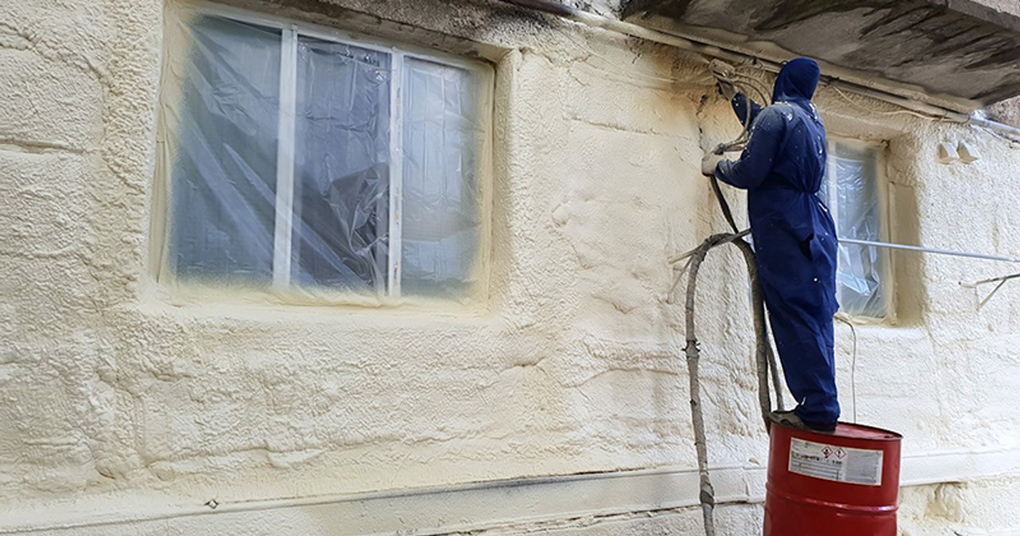
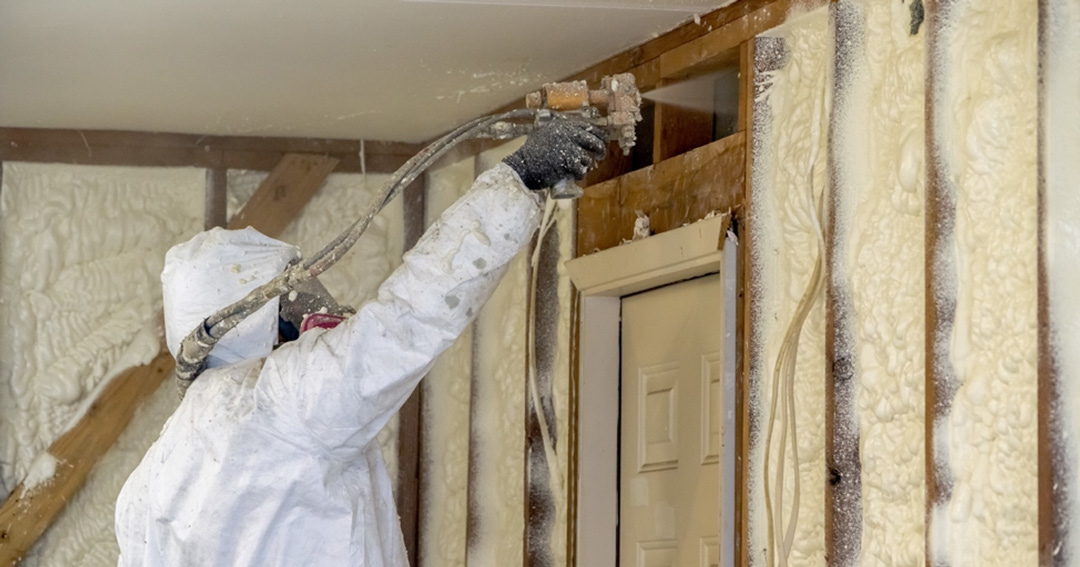
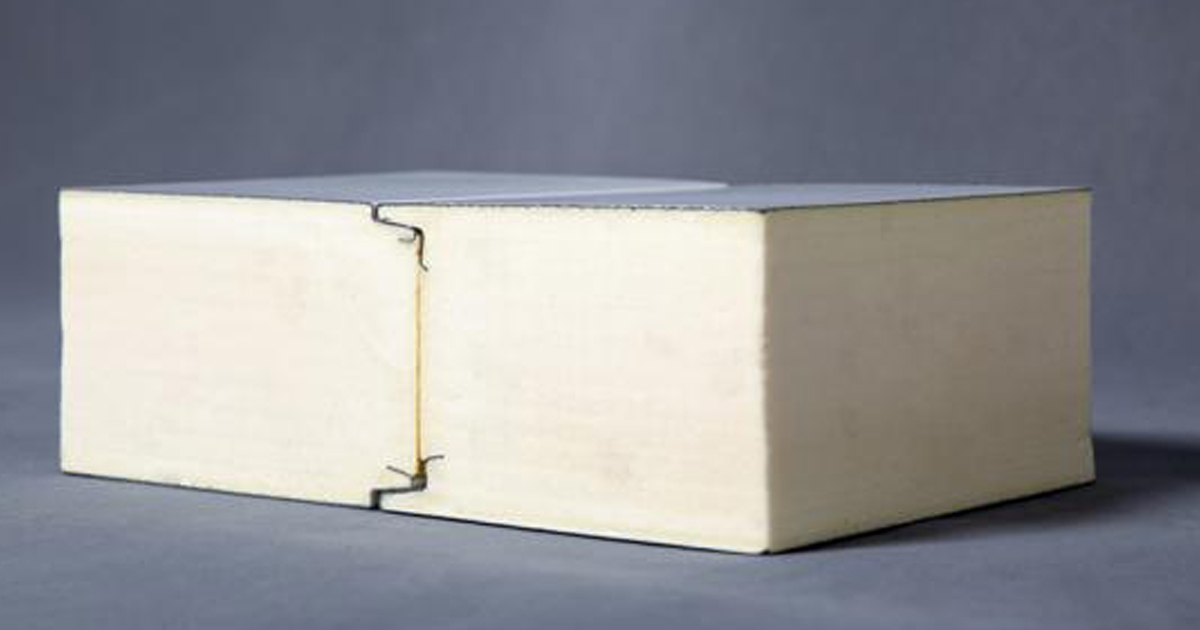
Among all the insulation materials, thermal insulation spray foam and sound insulation spray polyurethane foam shows the best performance for attic applications. This polymeric material has the highest R-value per inch, and serves as an air barrier, moisture barrier, and insulation all in one product.
Closed-cell spray foam, also offers structural reinforcement, it means that it enhances energy efficiency and moreover, it has great mechanical strength that improves the overall integrity of buildings.
This type of polyurethane foam has the ability to completely fill gaps and cracks and provide excellent sealing. By this way you get better temperature control, reduced energy bills, and improved indoor air quality. It also prevents condensation and mold growth, that makes it ideal for humid climates or areas prone to moisture penetration.
Furthermore, polyurethane foam insulation has excellent durability. It doesn’t sag from the surface (has very good adhesion to every substrates), settle, or degrade over time, ensuring consistent performance for decades.
Purchase of polyurethane foam raw materials from Imen Polymer Chemie
If you are a contractor, distributor, or manufacturer looking for high-quality polyurethane foam raw materials, Imen Polymer Chemie is your trusted partner. As a leading Iranian supplier in the field of polyurethane chemistry, we provide advanced formulations tailored for attic spray foam applications.
Our raw materials are formulated for optimal cell structure, thermal resistance, and application consistency. With expert technical support and reliable delivery, we help you produce insulation systems that meet international quality and energy efficiency standards.
To learn more or place your order, visit our website or contact our commercial team directly. Boost your insulation solutions with high quality polyurethane raw materials from Imen Polymer Chemie and stay ahead in the competitive insulation market.
Conclusion
Choosing the best attic insulation can have a great impact on your building’s comfort, energy costs, and structural integrity. While each insulation type has its own benefits, polyurethane spray foam stands out for its excellent thermal performance, air sealing capability, and long-term durability.
Whether you’re building a new home or upgrading an existing attic, polyurethane foam is a smart choice. And when it comes to sourcing the raw materials, Imen Polymer Chemie is your trusted partner that delivers high-quality formulations and expert technical support to ensure every project meets the highest standards.