
Table of contents
Among the various insulation materials available today, polyurethane foam has become the preferred choice for commercial refrigeration equipment. Its excellent thermal insulation properties, lightweight structure, durability, and ability to fill complex cavities make it an ideal solution for modern store refrigerators. As energy efficiency becomes increasingly important, polyurethane foam continues to be one of the key materials used to improve refrigeration efficiency and reduce operating expenses. As a result, in this article we are going to discuss its benefits, properties, the way of injection process, and introducing a valid manufacturer for buying the raw material.
Introduction of store refrigerator polyurethane foam
Polyurethane foam used in store refrigerators is a rigid insulation material produced through the reaction of polyol and isocyanate components. During the manufacturing process, these materials react and expand to form a highly uniform cellular structure. The resulting foam fills the space between the inner liner and outer shell of the refrigerator, creating a continuous insulation layer.
Unlike traditional insulation materials that are cut and inserted into panels, polyurethane foam is formed directly inside the refrigerator cabinet. This manufacturing method allows the foam to expand into complex geometries and fill areas that would be difficult to insulate using pre-formed materials. As a result, manufacturers can achieve more consistent insulation throughout the cabinet.
Commercial refrigeration systems require insulation that can perform well under continuous operating conditions. Store refrigerators run continuously and are opened many times throughout the day. They also work in different environmental conditions and store varying amounts of products, which makes effective insulation essential. It is so popular in commercial refrigerators because it provides effective insulation and helps keep the strength of the cabinet for many years. For this reason, refrigerator manufacturers place significant emphasis on selecting high-quality raw materials and optimized foam formulations.

Benefits of using polyurethane in the store refrigerator
One of the most important advantages of polyurethane foam in store refrigerators is that it helps to energy savings. In fact, effective insulation reduces the amount of heat entering the refrigerator cabinet, allowing the cooling system to function more efficiently. Lower energy consumption can significantly reduce the costs for supermarkets and food retailers that use multiple refrigeration units.
This foam also improves storage efficiency. Because it provides excellent insulation performance even at relatively thin thicknesses, manufacturers can design refrigerators with larger internal storage volumes without increasing external dimensions. This gives more space inside the refrigerator for products.
Another benefit is the reduction of compressor workload. When heat gain through the cabinet walls is minimized, refrigeration components do not need to work so hard to maintain target temperatures. This can contribute to lower mechanical stress on the refrigeration system and extend equipment service life.
It maintains stable temperatures inside the refrigerator. As a result, food products, beverages, and other temperature-sensitive goods can retain their freshness, quality, and appearance for a longer time. This is especially important in retail stores, where fresh and high-quality products are more likely to attract customers and encourage purchases.
Finally, polyurethane insulation supports modern sustainability goals. By improving energy efficiency, it reduces electricity consumption and contributes to lower environmental impact compared with less efficient refrigeration systems.
Polyurethane foam properties of store refrigerator
Polyurethane foam offers a unique combination of properties that make it one of the most effective insulation materials for store refrigerators. Its main advantage is its ability to reduce heat transfer between the refrigerated compartment and the surrounding environment. This helps refrigerators keep steady temperatures while reducing the amount of energy required for cooling.
A key factor behind this performance is the foam’s closed-cell structure. During production, millions of tiny cells are formed within the material, creating an effective barrier against heat flow. This structure improves insulation efficiency and helps the foam continue to remain effective over many years of operation.
Moreover, the foam can improve the overall strength of the refrigerator cabinet. Once it is cured, the foam adheres to the inner and outer surfaces of the cabinet, creating a rigid and stable structure. This added strength protects the refrigerator from deformation during transportation, installation, and daily use.
Rigid polyurethane foam is also suitable for refrigeration environments where moisture and condensation are common. Its closed-cell structure limits water absorption, helping preserve insulation performance and protect refrigerator components. In addition, the foam maintains its shape and physical properties over time, ensuring long-term reliability throughout the service life of the equipment.

How to inject polyurethane foam in the store refrigerator?
The quality of insulation in a store refrigerator depends not only on the materials used but also on how the foam is applied during production. A precise injection process helps ensure that the insulation is evenly distributed throughout the cabinet and
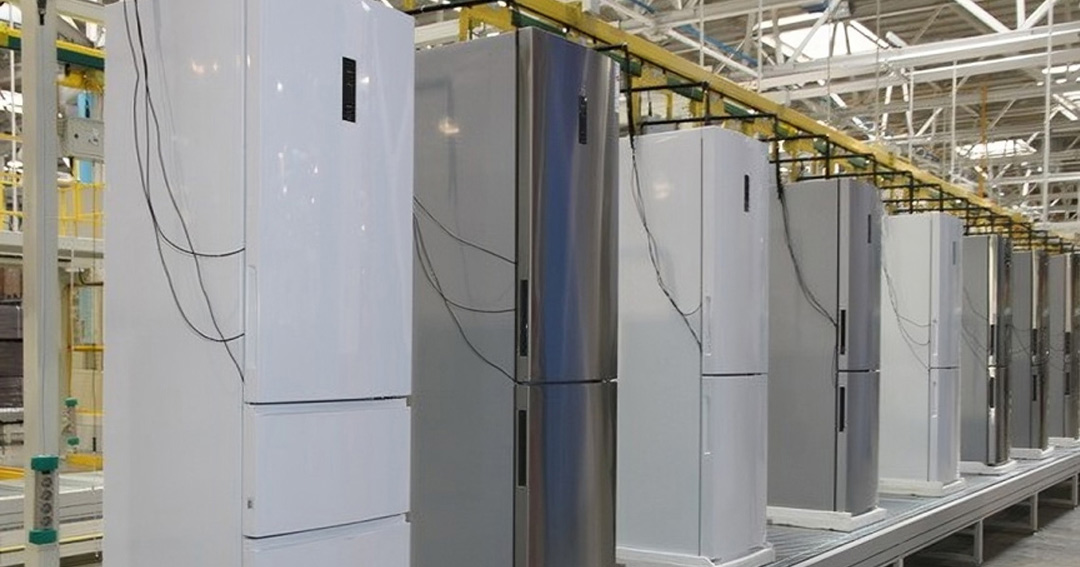
The process begins with the assembly of the refrigerator cabinet. A space is left between the inner liner and the outer shell, which will later be filled with polyurethane foam. Before the injection stage starts, manufacturers make sure that all parts are correctly positioned and properly sealed.
Next, the polyol and isocyanate components are fed into a dispensing machine, where they are measured and mixed in the correct proportions. The mixture is then injected into the cabinet through defined openings. As soon as the materials are mixed, they begin to react and expand.
The expanding foam spreads throughout the cavity, filling corners, edges, and other difficult to reach areas. This creates a continuous insulation layer without gaps, helping improve the thermal efficiency of the refrigerator.
After the cavity has been filled, the foam is allowed to cure and harden. During this stage, it develops its final structure and bonds to the body surfaces of the fridge. Once fully cured, the foam provides both effective insulation and additional structural support for the refrigerator cabinet. It has to mentioned that there are various factors influence the final foam properties; important ones are discussed in the following.
Factors affecting the quality of polyurethane insulation in refrigerators
Several factors can affect the final properties of polyurethane foam used in store refrigerators.
- Foam density is one of the most important considerations. If the density is too low, the foam may not provide enough strength and stability. If the density is too high, more raw material is required, which increases manufacturing costs. Manufacturers therefore choose a density level that delivers good insulation and durability while keeping material usage and costs under control.
- Accurate mixing of the raw materials is equally important. Polyol and isocyanate must be combined in the correct ratio to produce a uniform foam structure. Even small variations can affect the consistency of the foam and the quality of the finished insulation.
- Temperature control during production also plays a key role. The temperature of the materials and the manufacturing environment can influence how the foam expands and cures. Proper control helps create a more uniform and reliable insulation layer.
- Cabinet design can also impact the foaming process. The cavity inside the refrigerator must be designed so the expanding foam can flow freely and fill the entire space. This helps prevent empty areas that could reduce insulation efficiency.
Purchase of polyurethane materials to insulate the store refrigerator
Choosing the right raw materials is essential for producing high-quality refrigerator insulation. Material quality, formulation compatibility, and supplier reliability are key considerations when selecting a system.
Polyol, isocyanate and necessary additives play an important role in determining foam structure, strength, and processing behavior. Using high-quality raw materials helps manufacturers achieve consistent insulation quality and stable production results.
At Imen Polymer Chemie, we provide technical support, formulation guidance, and consistent product quality to help manufacturers optimize production and achieve reliable insulation results. Our team works closely with customers to address processing challenges and ensure dependable performance throughout the manufacturing process.
As a manufacturer of polyurethane raw materials, Imen Polymer Chemie offers polyurethane systems for insulation applications, helping customers develop efficient and durable solutions for commercial refrigeration and other industrial sectors.
Conclusion
Polyurethane foam has become an essential material in modern store refrigerator manufacturing. Its unique combination of thermal insulation, structural strength, moisture resistance, and manufacturing flexibility makes it one of the most effective insulation solutions for commercial refrigeration equipment.
From raw material selection to foam injection and cabinet construction, every stage plays a role in the overall quality of the insulation system. By using high-quality polyurethane materials and optimized production methods, manufacturers can produce energy-efficient refrigerators that offer long service life, reliable operation, and consistent cooling.


